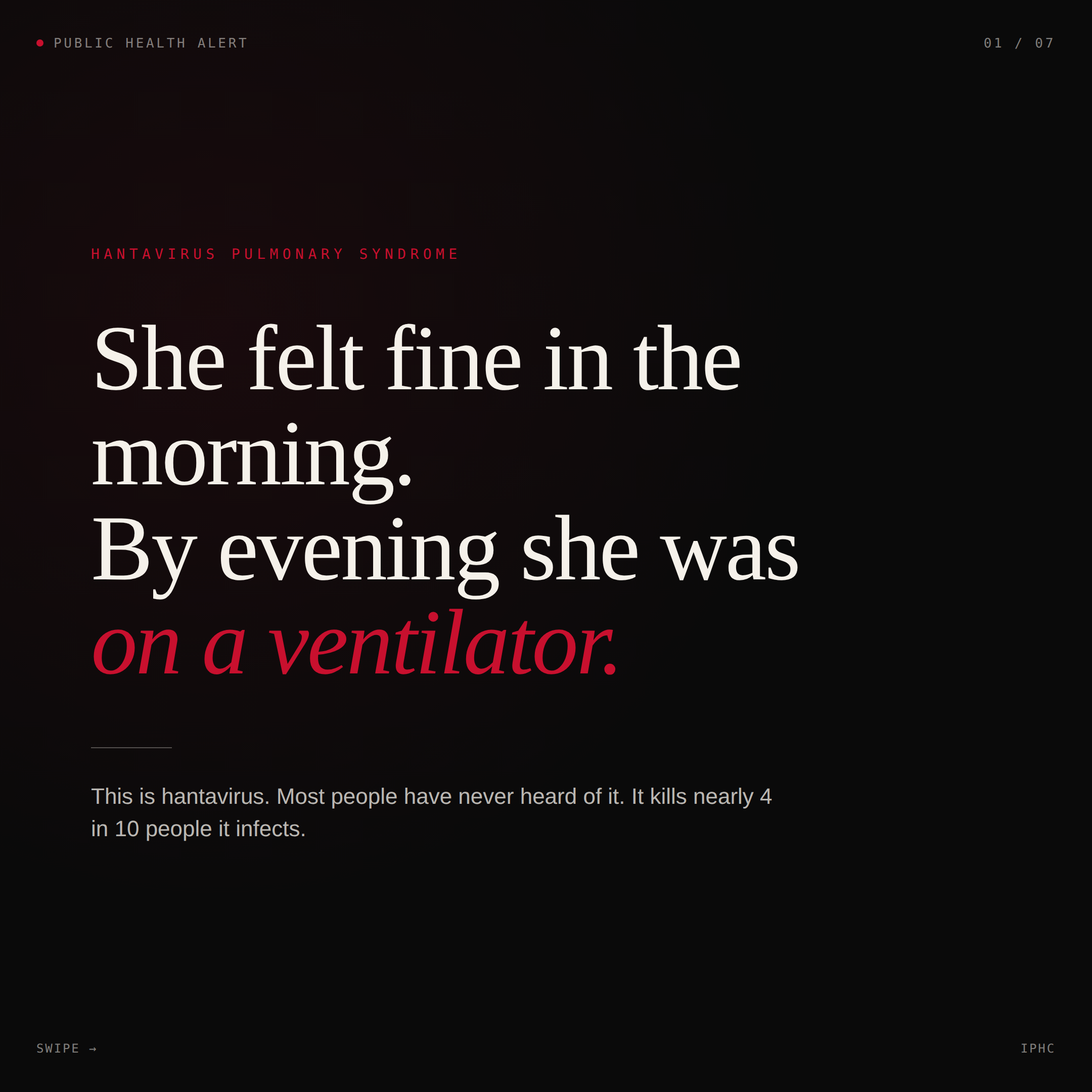
She felt fine in the morning. By evening she was on a ventilator.
This is hantavirus. Most people have never heard of it. It kills nearly 4 in 10 people it infects.
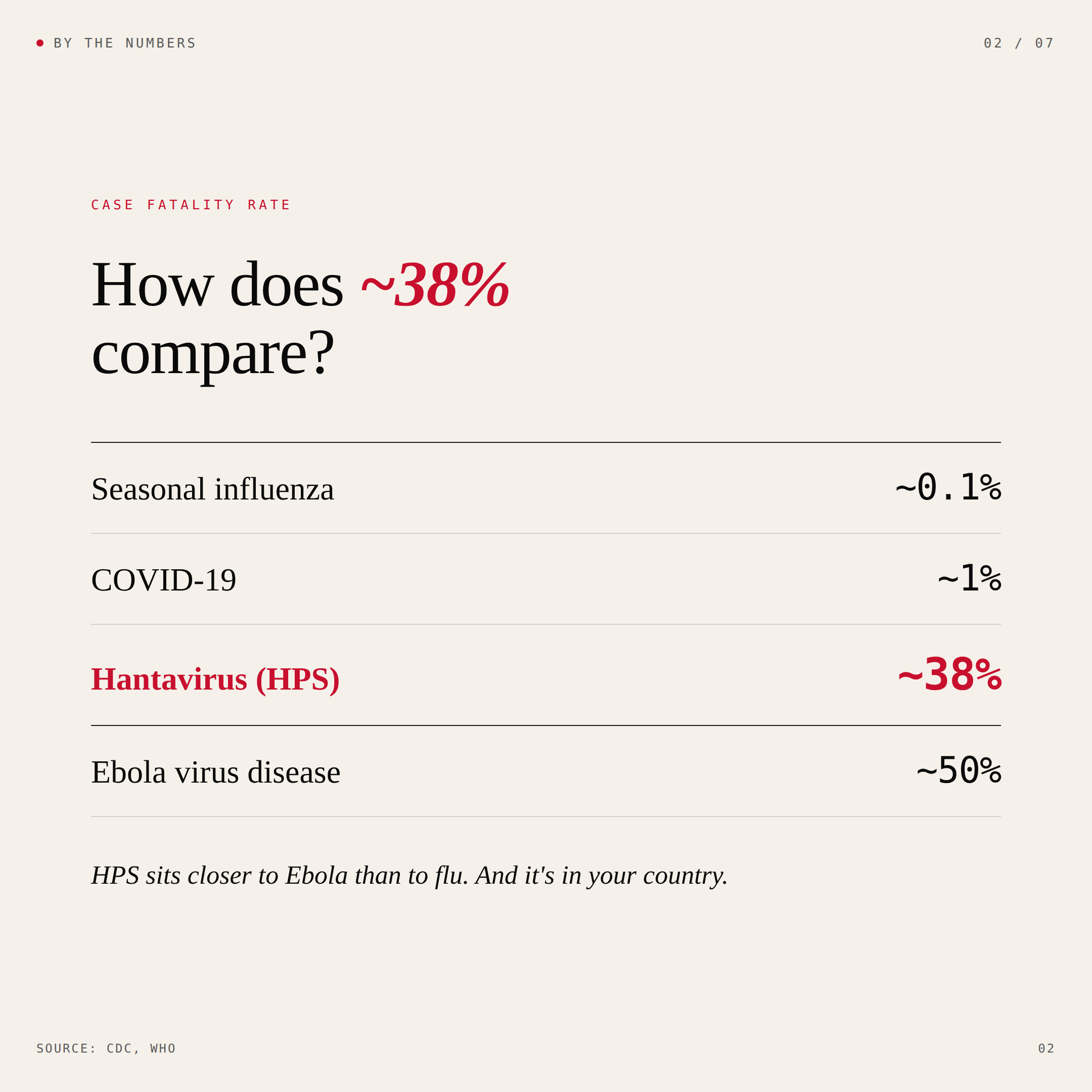
How does ~38% case fatality compare?
Seasonal influenza kills roughly 0.1% of those it infects. COVID-19 sits at about 1%. Hantavirus Pulmonary Syndrome (HPS) sits at approximately 38%. Ebola virus disease, by comparison, runs around 50%.
HPS sits closer to Ebola than to flu. And it’s in your country.
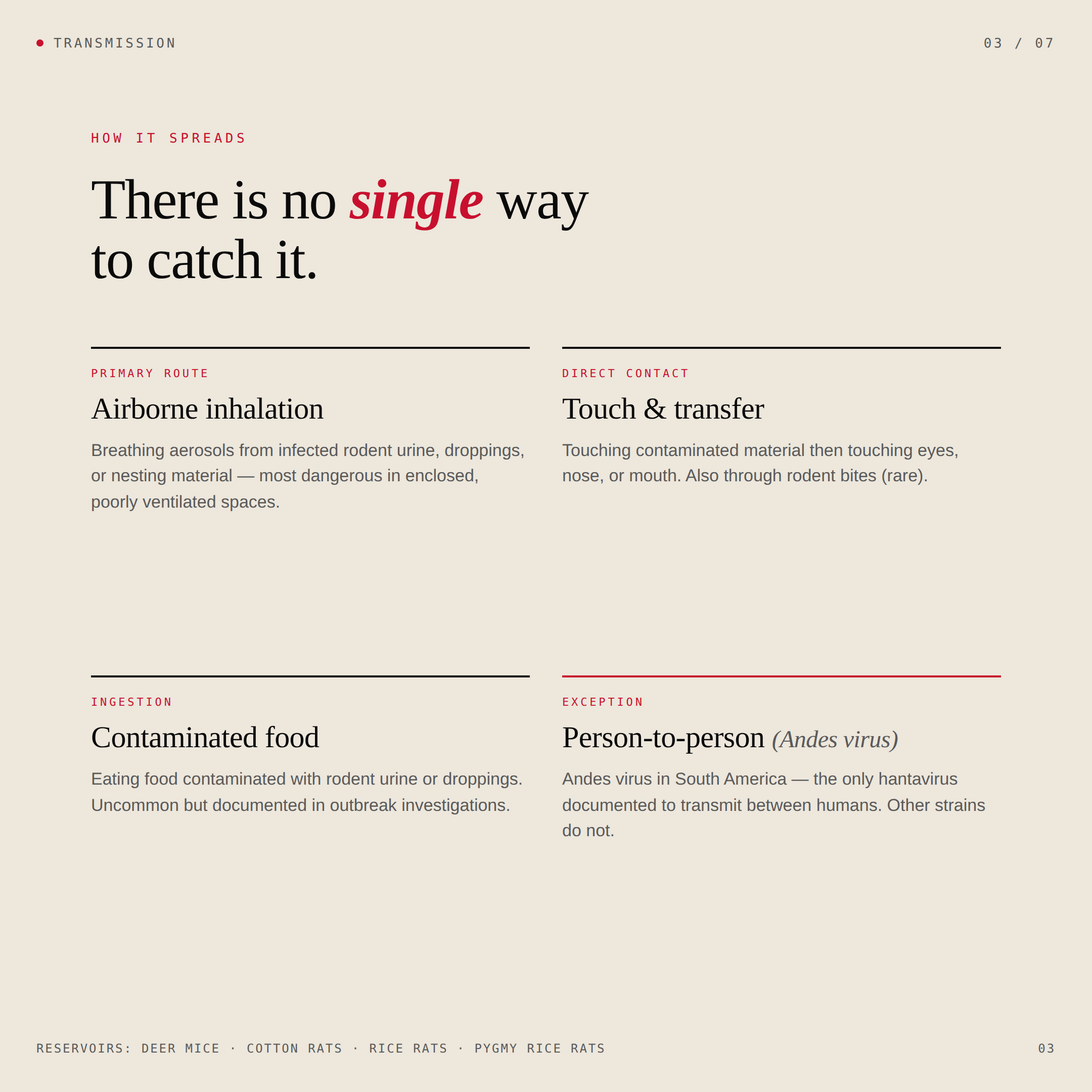
There is no single way to catch it.
Most cases come from airborne inhalation — breathing aerosols from infected rodent urine, droppings, or nesting material, especially in enclosed, poorly ventilated spaces. But that isn’t the only route.
Direct contact transmits the virus when contaminated material touches the eyes, nose, or mouth, or through rare rodent bites. Ingestion of food contaminated with rodent urine or droppings has been documented in outbreak investigations. And in South America, the Andes virus is the only known hantavirus that transmits between humans — a critical exception, but one that does not apply to the strains circulating in North America.
The reservoirs are wild rodents: deer mice in North America, cotton rats and rice rats in the southern United States, and long-tailed pygmy rice rats in Patagonia and the Andes. The animals carry the virus without getting sick.
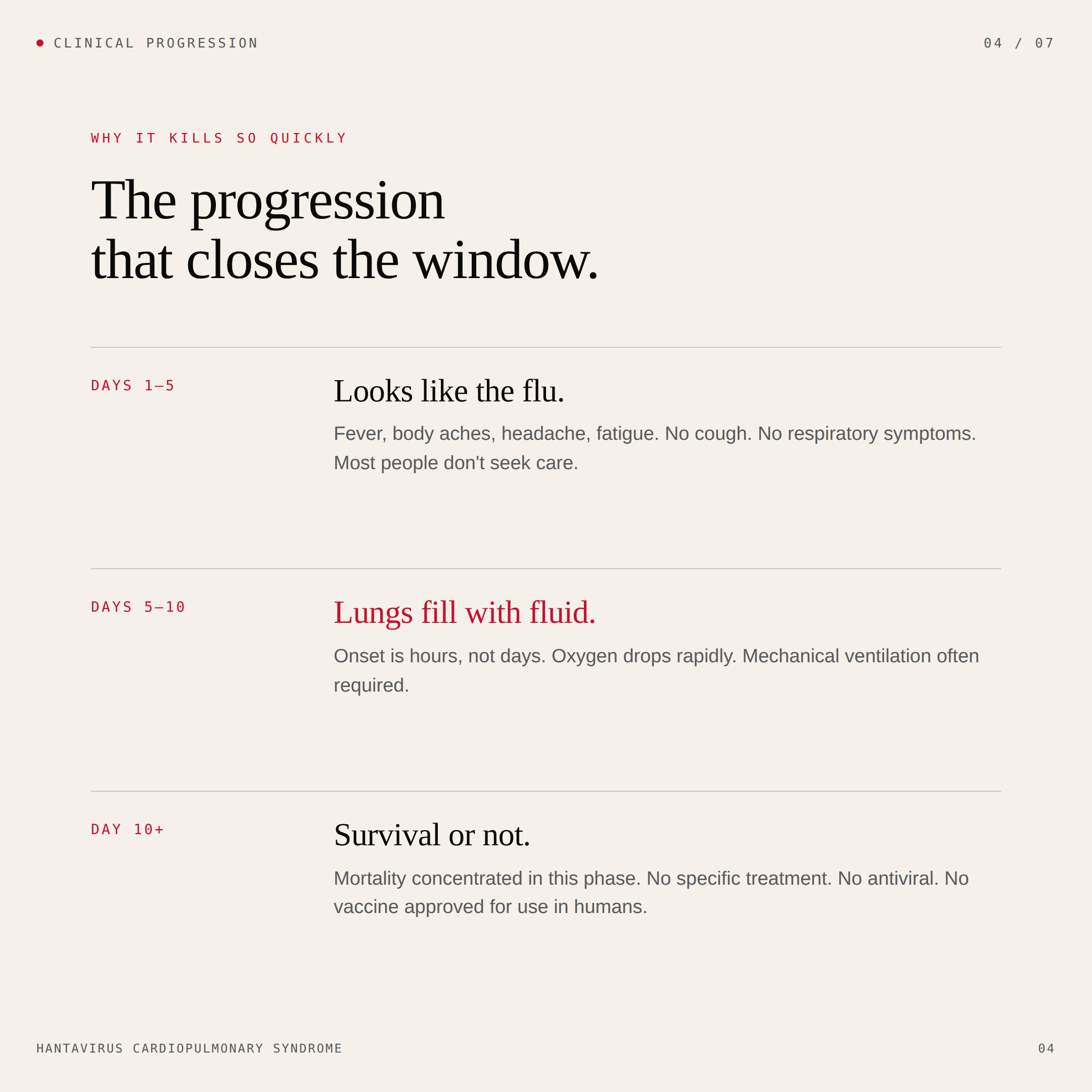
The progression that closes the window.
HPS unfolds in three phases, and the speed of phase two is what makes the disease so dangerous.
In the first five days — the prodromal phase — symptoms look like the flu. Fever, body aches, headache, fatigue. There is no cough. No respiratory symptoms. Most people don’t seek care.
Between days five and ten, the cardiopulmonary phase begins. Lungs fill with fluid. Onset is hours, not days. Oxygen drops rapidly. Mechanical ventilation is often required.
After day ten comes resolution or critical outcome. Mortality is concentrated in the second phase. There is no specific treatment. No antiviral. No vaccine approved for use in humans.
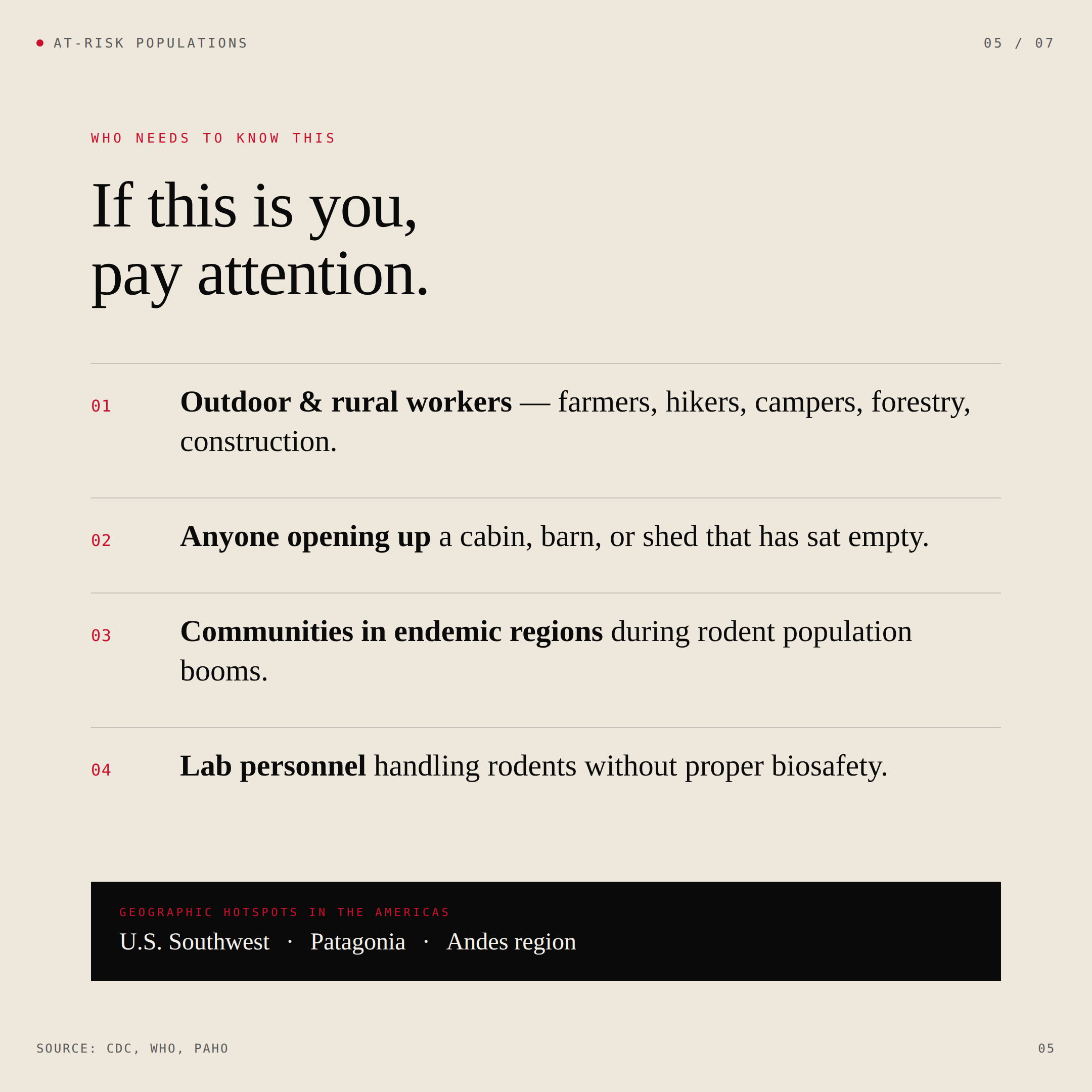
If this is you, pay attention.
Outdoor and rural workers — farmers, hikers, campers, forestry and construction workers — face elevated risk through occupational exposure to rodent habitats.
Anyone opening up a cabin, barn, or shed that has sat empty is at risk during the act of cleaning, when previously settled dust becomes airborne again.
Communities in endemic regions face heightened risk during rodent population booms, which often follow mast seed years and unusually wet seasons.
Lab personnel handling rodents without proper biosafety containment are at risk by occupational exposure.
Geographic hotspots in the Americas concentrate in the U.S. Southwest, Patagonia, and the Andes region.
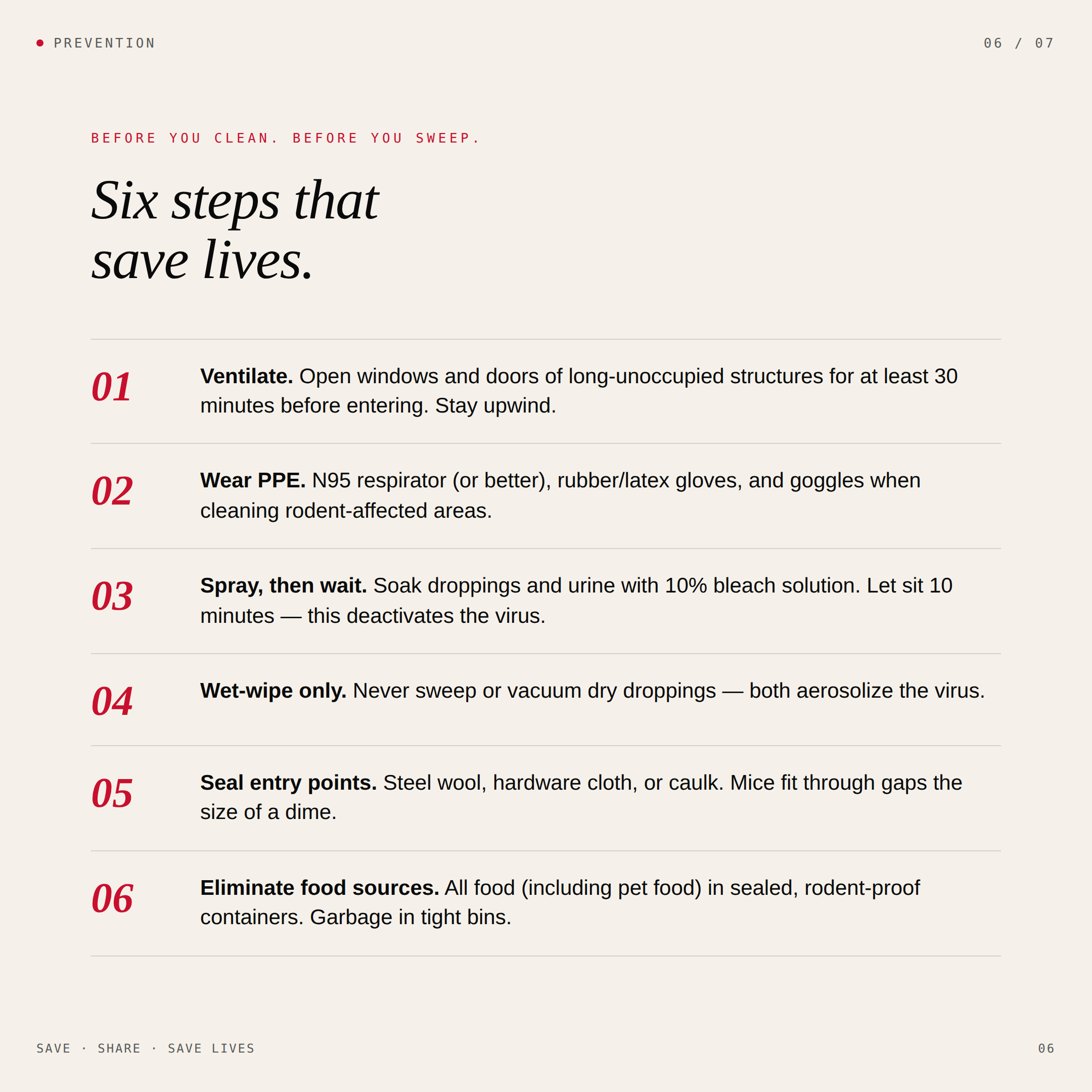
Six steps that save lives.
Before you clean, before you sweep, take these precautions whenever you suspect rodent activity:
Ventilate. Open windows and doors of long-unoccupied structures for at least 30 minutes before entering. Stay upwind during ventilation.
Wear PPE. An N95 respirator (or better), rubber or latex gloves, and goggles when cleaning rodent-affected areas.
Spray, then wait. Soak droppings and urine with a 10% bleach solution. Let it sit for 10 minutes — this deactivates the virus.
Wet-wipe only. Never sweep or vacuum dry droppings. Both methods aerosolize the virus and create the inhalation exposure that causes infection.
Seal entry points. Steel wool, hardware cloth, or caulk. Mice can fit through gaps the size of a dime.
Eliminate food sources. Store all food (including pet food) in sealed, rodent-proof containers. Dispose of garbage regularly in tightly sealed bins.
Don’t wait for it to get better.
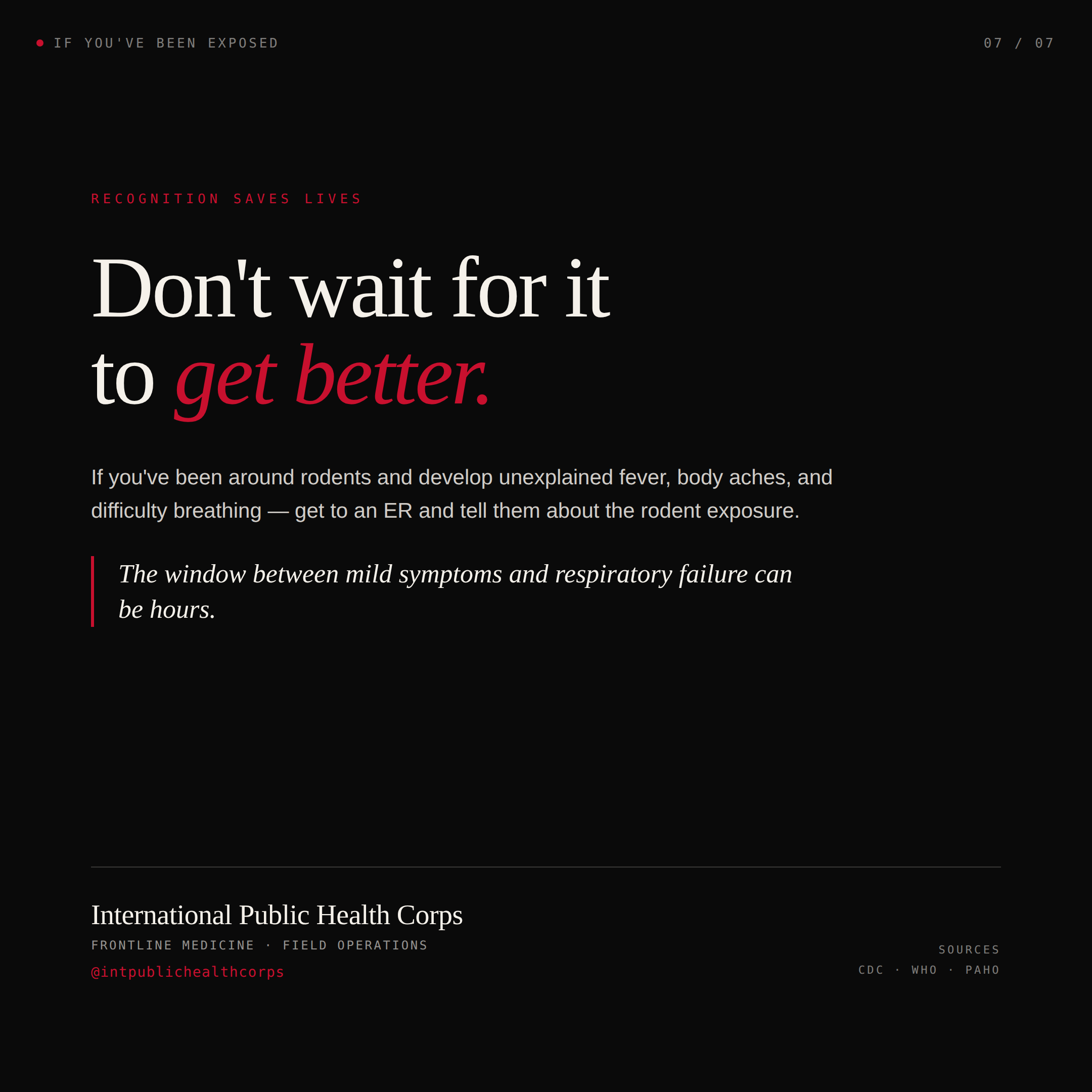
If you have been around rodents and develop unexplained fever, body aches, and difficulty breathing, get to an emergency room and tell the providers about the rodent exposure. Mention it explicitly — HPS is rare enough that it is not always the first diagnosis considered, and the patient’s exposure history is one of the most important pieces of information for clinicians making the call.
The window between mild symptoms and respiratory failure can be hours. Recognition saves lives.
Sources: U.S. Centers for Disease Control and Prevention (CDC), World Health Organization (WHO), Pan American Health Organization (PAHO).
This article is part of International Public Health Corps’s public health awareness series. For more information about IPHC’s programs and how to support our work, visit our About page.